Originally posted on Substack on Aug. 13, 2025
I am an amateur gardener at best.
I love flowers, however, and in recent years have tried to grow more of them myself. I embarked on my most ambitious project yet this spring, turning a dull, weedy part of our yard into a flower garden. Some of the flowers are coming up nicely, some are still in the wait-and-see phase. We also had an unusually rainy spring (which made planting take a lot longer than expected), so I hope none of my bulbs rotted from all the excess moisture.
My new garden brings me joy and I love seeing it come to life. But one little spot in particular makes me smile: my peonies.
That little section of the garden was not their original home. I planted those peonies in the spring of 2021. This is their fifth growing season. The first year, I planted the bulbs in the spring and eagerly awaited evidence of growth. A few small leaves and stems came up, but that was it. Disappointed, I Googled “do peonies produce flowers the first year” to see if my plants were normal. I learned that yes, sometimes it can take up to a few years for a peony bulb to produce flowers.
Still a little disappointed, but resigned to the facts, I waited. No blooms in 2022. Zilch in 2023. The foliage grew each year, but no blooms. 2024 rolled around. This should be it, I thought. My hopes seemed to be confirmed when the plant produced prolific stems and leaves right on time. But as the days and weeks went by, no buds appeared. It soon became evident that 2024 was not going to bring the long-awaited gorgeous flowers. Just more disappointment.
I consulted Google once again. I read a few troubleshooting articles and decided there were two possibilities for why my peonies were growing but not thriving well enough to blossom.
- They weren’t getting enough sun.This could be possible. The plants were up next to the house. While they certainly weren’t without sunlight by any means, they were under the overhang of our roof a bit. Maybe they just didn’t get enough.
- They weren’t planted to the right depth.Apparently peonies prefer being planted 1-2 inches under the soil and no more. If you accidentally plant them deeper than 2 inches, they sense it and won’t bloom. Probably the most likely culprit. And these flowers are supposed to be easy to grow, I thought. Starting to sound pretty high maintenance to me.
Ugh. I’m going to have to replant them, I realized. Then came the question: Do I dig them up and just try planting them at a different depth where they are? Or do I dig them up and plant them farther out into the yard (with more direct sunlight), in a different spot entirely, paying close attention to the planting depth? To further complicate the decision-making process, I read that sometimes, after being transplanted, a peony won’t produce blossoms the first year anyway. Great. I may not even know if what I did worked next spring.
Finally, I decided to dig them up and transplant them somewhere completely new in the yard. My research informed me that the best time to do so would be in the fall. So I left them where they were through the hot summer months, carefully dug them up in the fall, and moved them to a new spot out in the yard where they would be sure to receive hours of direct sunlight each day, measuring with a ruler (no eyeballing it) to make sure they didn’t exceed two inches in depth. We’ll see what happens. Hopefully I didn’t kill them.
I lost one bulb, I’m pretty sure, to a squirrel. I caught one digging in the area one day and then noticed a spot where one was missing. Anyone else have issues with squirrels digging up their bulbs? I’ve lost some others in the past. Squirrels are deceptively cute little devils.

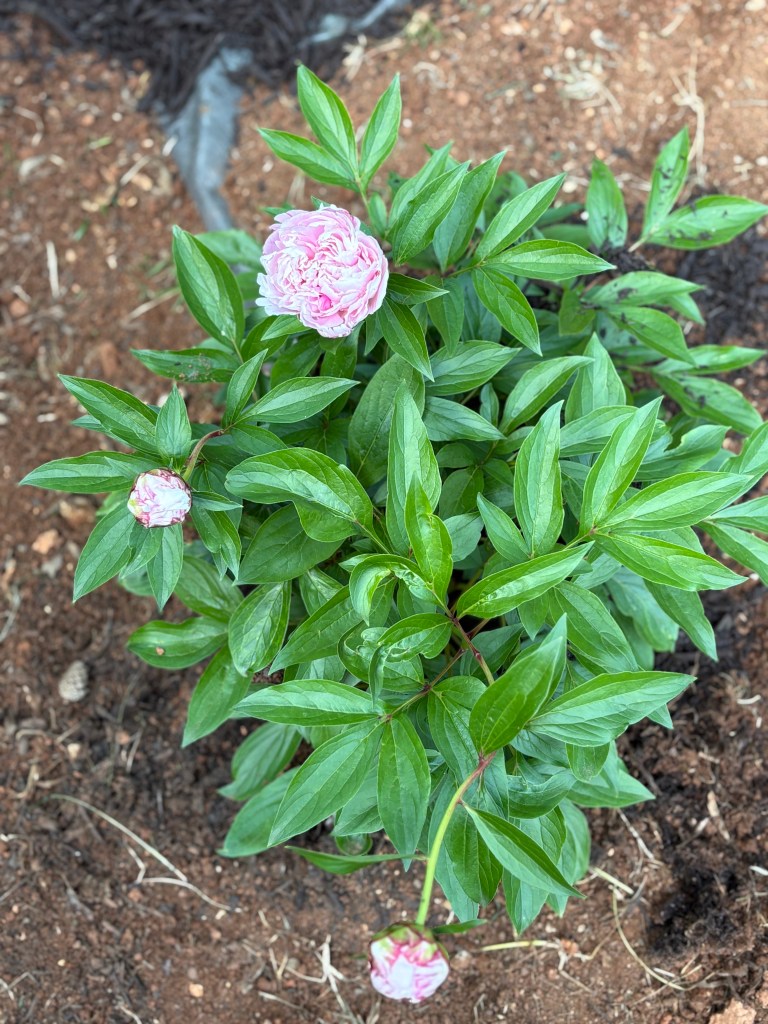
Early spring started off a little warmer than average for us, and with the warmer temperatures came little green shoots where I planted my peonies. Yay! I didn’t kill them! I rejoiced. Now let’s see what they do.
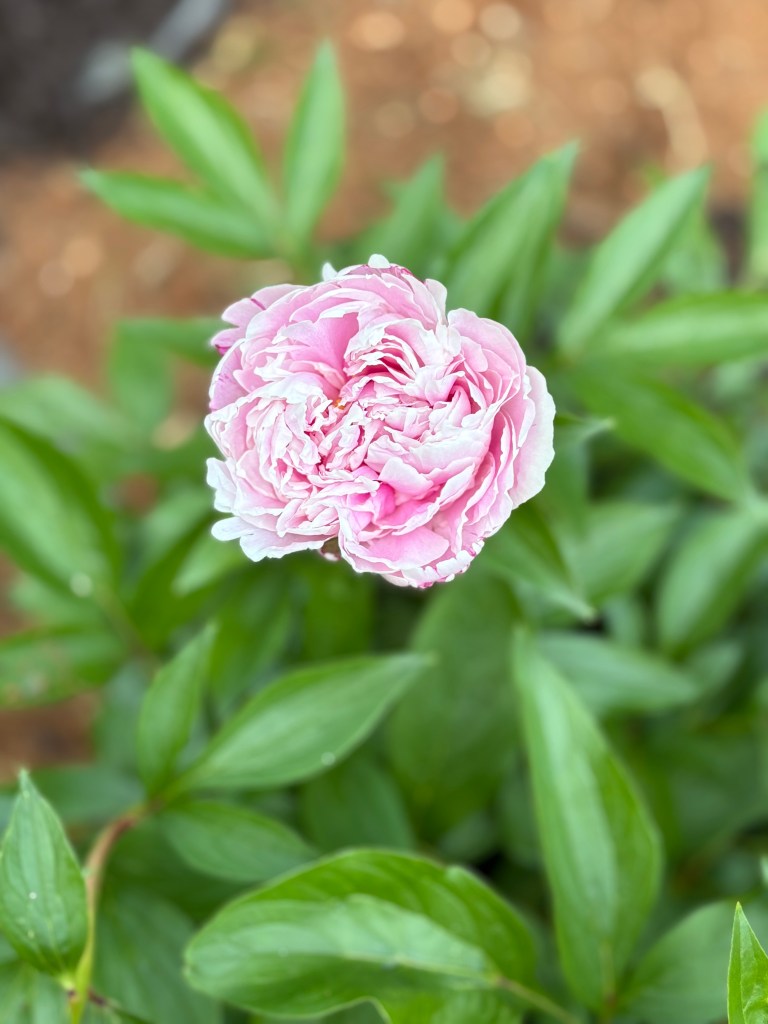
As the weeks went by, the young shoots grew taller and taller, until I finally noticed the long-awaited-and-desired little buds. YES!!! It worked!
I waited excitedly for those first blooms and they were every bit as breathtaking as I had hoped. Three showy, delicate, heavy flowers. I should have cut them and brought them inside, but I wanted to see how long they would last outside on their own. The answer: Not long. Especially with torrential downpours and a couple of storms that produced small hail. Next year I know to cut them and bring them inside to enjoy. But I still found much joy in looking out the door or window and seeing them showing off in my new little garden, which was at that stage very much still a work in progress thanks to all the heavy rain.
The process of troubleshooting and transplanting found me stumbling upon all sorts of lessons from my little garden.
Much like my peonies, sometimes I appear to have all the right ingredients to lead a flourishing life. I may even produce impressive foliage and look like I’m healthy and doing well. Yet something important is missing. Something that keeps me from truly thriving and producing the beautiful blooms and fruit I’m designed to grow.
“I am the true vine; you are the branches. Whoever abides in me, and I in him, he it is that bears much fruit, for apart from me, you can do nothing.” John 15:5 (ESV)
If I’m not blooming, maybe I’m not adequately connected to the Vine. This could look like not spending time in the Word of God each day (or I’m reading out of rote obligation and not taking in or studying what I’m reading). Or perhaps I’m in a season where I haven’t had much fellowship with other believers and I’ve missed out on the “iron sharpening iron” and “spurring on” such community should produce. Maybe I’ve had those things, but my prayer life is an abysmal afterthought. It’s amazing how one “ingredient” can make all the difference!
I’m not suggesting that if you feel like you aren’t flourishing, that you should just transplant yourself and start somewhere new. Maybe that is part of God’s plan for you. More likely, it’s to stay where you are, but seek out that missing ingredient and add it back into your life (or try it out for the first time).
“The thief comes only to steal and kill and destroy. I came that they may have life and have it abundantly.” John 10:10
God wants us to flourish under his care as the master gardener. We can only do so if we’re connected to Him and relying on his love, grace, and mercy. Does that mean life will always be sunshine and roses? Not by any means. Trials will still come – the Bible promises that. The master gardener may prune us, which can feel painful and even extreme, but ultimately leads to more growth and fruit. If we’re following him wholeheartedly, we can trust that he will care for us, even in times of drought, flood, and storm when external conditions beyond our control might try to take us out. We can still find joy and peace, even in those times, if we’re abiding in him.
Maybe I’ll have more peony insights to share next spring. I also discovered that while I thought I had moved all the bulbs over to the new site, some fragments remained at the old site, and they produced prolific foliage (with no blooms) once again! This fall, I plan to try to transplant those as well and see if I can double my plants for next spring without having to buy any new bulbs. We’ll see what happens!

 Liz Parkhurst
Leave a comment